
The 5 Cases Every MIS Practitioner Should Master Before Going Hardware-Free
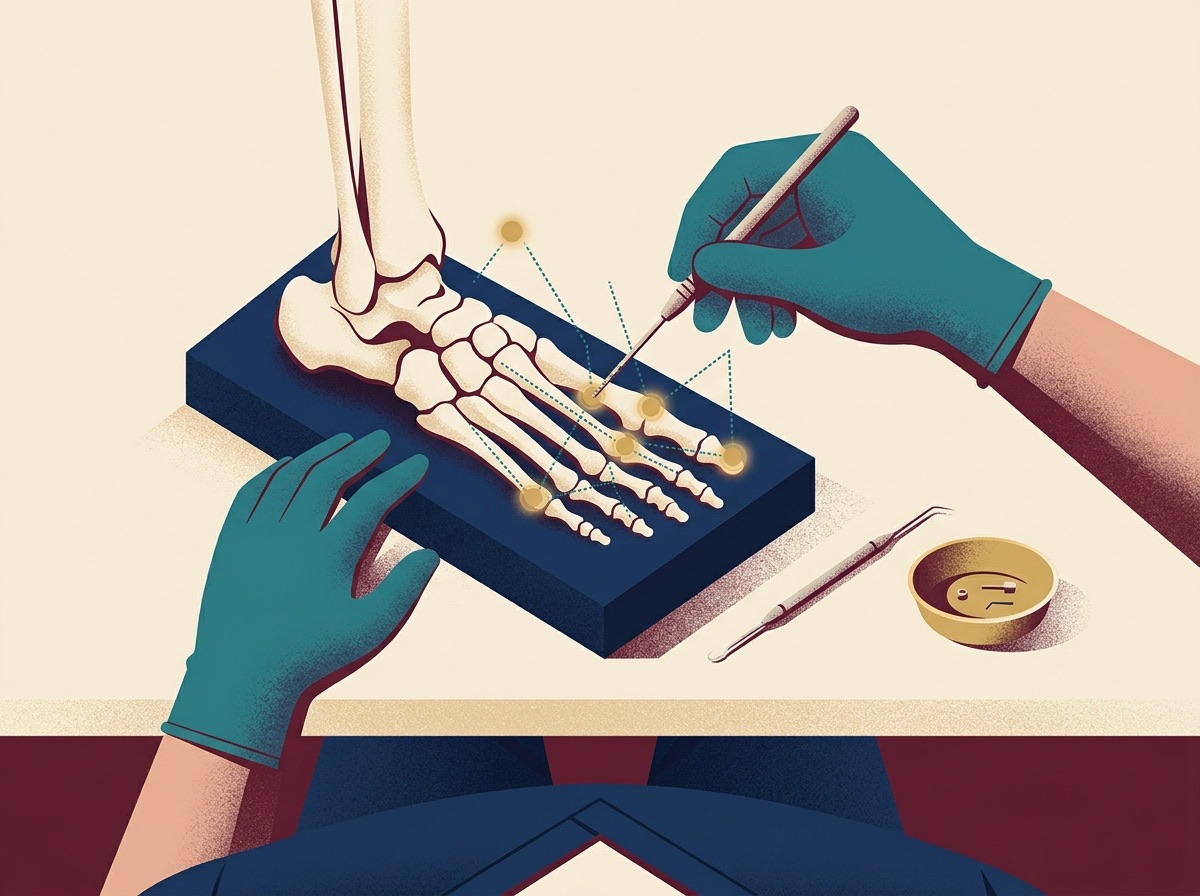
One of the most common questions I get from doctors interested in minimally invasive surgery is this: Where do I start?
It is a fair question. MIS can feel overwhelming when you first encounter it - new instrumentation philosophy, different tactile feedback, a learning curve that is real and unforgiving if you are not prepared.
But here is what I have learned after years of performing and teaching MIS: confidence does not come from complexity. It comes from mastery of the fundamentals.
Before any doctor in my programs attempts advanced cases or commits to a hardware-free model, I want them to be deeply comfortable with five foundational case types.
01. Minimally Invasive Bunionectomy
The bread and butter. The bunionectomy done well under MIS is elegant - small incision, precise osteotomy, immediate weight bearing. Done poorly, it is a lesson in humility. Master this one first.
02. Minimally Invasive Hammertoe Correction
Hammertoes are extraordinarily common. An MIS approach reduces soft tissue trauma and speeds recovery. It is also a case where patient satisfaction is consistently high - which makes it excellent for building your early cash-pay referral base.
03. Corn and Toe Deformity Correction
Underrated. These cases teach you precision, patient selection, and the importance of setting realistic expectations. They are also highly gratifying for patients - and gratified patients refer.
04. Plantar Plate Repair and Lesser Metatarsal Work
This is where tactile skill development becomes critical. Smaller structures, tighter anatomy, less margin for error. These cases separate the surgeon who has done MIS from the surgeon who truly understands it.
05. Bone Spur Excision and Forefoot Deformity Correction
A versatile category that opens the door to a wide patient population. Mastery here expands your case volume significantly without requiring hospital access or hardware systems.
There is no substitute for hands-on cadaver work in developing MIS confidence. The tactile feedback, the spatial orientation, the decision-making that happens on the table - that only comes from doing it.
If you are serious about MIS, invest in proper cadaver lab training before you take it to a live patient. Your patients will thank you. So will your confidence.
WWN Consulting Group offers cadaver lab guidance as part of its MIS Mastery Program. Learn more about our programs.
Dr. Helene Nguyen, DPM is a podiatric surgeon, MIS specialist, and founder of WWN Consulting Group and Feet ’N Beyond of New Jersey. She coaches foot and ankle physicians on surgical mastery, office-based surgery systems, aesthetic procedures, and complete practice transformation.
Frequently Asked Questions
Where should a practitioner begin with minimally invasive foot surgery?
Begin with formal education, hands-on training, and foundational cases that match the practitioner’s current skills and scope. The objective is repeatable decision-making rather than a large case count. A structured progression should include instrumentation familiarity, imaging interpretation, patient selection, procedural planning, postoperative protocols, and access to experienced mentorship when questions arise.
Why are foundational cases important before advanced MIS procedures?
Foundational cases let the practitioner learn how small-incision visualization, tactile feedback, fluoroscopic orientation, and postoperative expectations differ from familiar open approaches. Repetition makes those decisions more consistent. Adding complexity before those fundamentals are dependable can make it harder to identify whether a challenge comes from technique, case selection, equipment, or the underlying pathology.
Does mastering these five case categories automatically make a surgeon ready to go hardware-free?
No checklist can replace professional judgment, appropriate credentials, supervised training, and case-by-case assessment. These categories provide a practical learning framework, but readiness also depends on outcomes, complication management, local regulations, facility systems, patient factors, and the surgeon’s ability to recognize when an office-based or hardware-free approach is not appropriate.
What is the role of cadaver lab training in MIS education?
Cadaver work provides a controlled environment for developing instrument handling, spatial orientation, and anatomic understanding before applying a new technique in clinical care. It also gives instructors an opportunity to observe technique and correct habits directly. WWN includes cadaver lab guidance within the MIS Mastery Program as part of a broader training pathway.
How should a practitioner evaluate progress between training and independent cases?
Use defined competencies rather than confidence alone. Review procedural planning, instrument handling, imaging orientation, execution, documentation, postoperative protocols, and the ability to identify complications or convert the plan when necessary. Case review with an experienced mentor can reveal patterns that volume alone may hide. Progress should be gradual, documented, and consistent with professional standards, credentials, and the resources available in the clinical setting.