
What Office-Based Surgery Actually Looks Like - And Why More Doctors Are Making the Shift
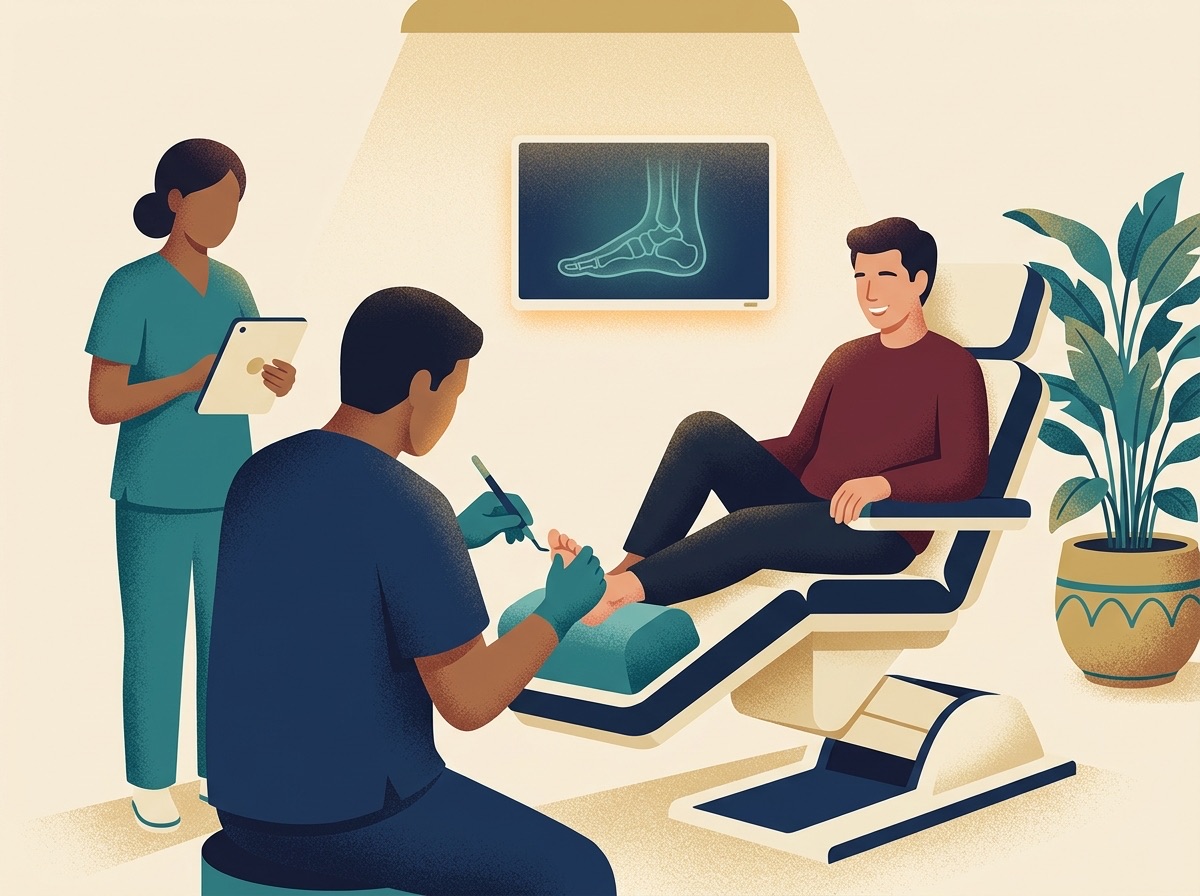
When I tell doctors that I perform minimally invasive foot surgery in my office - under local anesthesia, without pins, screws, or plates, with patients walking the same day - the response is usually one of two things.
Either they lean in and say: tell me more.
Or they say: that sounds too good to be true.
I understand both reactions.
Office-based surgery is not what most of us were trained for. We were trained in hospitals, in ASCs, with full hardware sets and OR teams and a system built around surgical volume and facility fees. The idea that you can do meaningful foot surgery in your own office feels like a departure from everything familiar.
But here is what I have experienced - and what the doctors I coach experience once they build the system: it is not a departure. It is an upgrade.
For the Patient
The experience is completely different. They are in a familiar, comfortable environment. The team knows them. Recovery begins immediately. There is no hospital anxiety, no facility fee surprise, and no waiting for an OR slot three weeks out.
For the Doctor
The control is unparalleled. You design the room, the workflow, the patient journey, and the experience. You are not waiting for a hospital administrator to approve your schedule. You are building exactly the practice you want to run.
For the Practice
The economics shift dramatically. No facility fee split. No hospital politics. Procedures that were once hospital-dependent become in-office revenue - on your terms, at your price.
Getting there requires the right training, the right systems, and the right team. It is not something you figure out alone on a Tuesday afternoon.
For the doctors who build it correctly, the question is never should I have done this. The question is always why did I wait so long.
Building an OBS model is one of the highest-leverage investments a foot and ankle physician can make. Done correctly, it transforms your schedule, your revenue, and your patient experience simultaneously.
WWN Consulting Group’s MIS Mastery Program includes comprehensive office-based surgery system development. Learn more about our programs.
Dr. Helene Nguyen, DPM is a podiatric surgeon, MIS specialist, and founder of WWN Consulting Group and Feet ’N Beyond of New Jersey. She coaches foot and ankle physicians on surgical mastery, office-based surgery systems, aesthetic procedures, and complete practice transformation.
Frequently Asked Questions
What is office-based foot surgery?
Office-based surgery refers to appropriately selected procedures performed in a properly equipped medical office rather than a hospital operating room or ambulatory surgery center. The term describes more than location. It includes the clinical protocols, room setup, staffing, supplies, sterile processes, documentation, emergency planning, patient communication, and follow-up systems required for that environment.
Why can the experience feel different for patients?
Patients remain in a familiar practice with a team that already knows the care plan and follow-up process. Scheduling and communication can be more direct because fewer organizations are involved. The exact experience still depends on the procedure, anesthesia plan, patient factors, and office systems, so expectations and responsibilities should be explained clearly before treatment.
What does a physician need before offering office-based surgery?
The physician needs appropriate training, credentials, patient-selection criteria, procedural protocols, a compliant physical environment, prepared staff, equipment and supply systems, sterile processing, documentation, emergency procedures, and a defined transfer plan. Requirements vary by jurisdiction and procedure. Building the model should therefore include legal, regulatory, accreditation, clinical, and operational review.
Is every foot and ankle procedure suitable for an office setting?
No. The appropriate setting depends on the patient, procedure, complexity, anesthesia needs, comorbidities, available resources, and the surgeon’s training and judgment. A strong office-based program is defined partly by its escalation criteria: the team knows which cases fit the model and which belong in a hospital or ambulatory surgery center.
How should a practice evaluate the economics of office-based surgery?
Model the complete episode rather than looking only at the procedure fee. Include room and equipment investment, supplies, staffing, sterilization, documentation, scheduling, patient communication, postoperative access, compliance, accreditation when applicable, and contingency planning. Compare expected volume with the practice’s actual capacity. A financially attractive service is not sustainable unless the clinical safeguards and team workflow are dependable at the same time.